Discover how the geology of the Columbia River Basin was formed first by lava floods and then by ice age floods—in illustrations.
I was proud to work on all aspects of the reporting including writing, illustrations, maps, charts, online development, and print design. View the interactive scrolling story published on June 29th, 2025, in The Seattle Times. Some of these graphics were also featured in an earlier Sunday A1 story titled “How we pushed the Columbia, the great river of the West, to its limit,” written by Lynda Mapes.
Tap on any thumbnail below to view a larger version.
Geologist Nick Zentner inspects a roadside cut near Granger, Washington. He is standing on cobbles transported by the
ancient Columbia River. The vertical wall is composed of ice age flood deposits and windblown loess—ideal for growing crops like grapes
and wheat. (Illustration by Fiona Martin / The Seattle Times)Grand Coulee Dam was built within a canyon first carved by lava flows and ice age floods. Today, there are 31 dams in the Columbia River Power System, and many more dams throughout the vast Columbia River Basin. The river is the country’s largest source of hydropower. (Illustration by Fiona Martin / The Seattle Times)Nick Zentner holds a
10-million-year-old quartzite river cobble from the ancient Columbia River, identified
by its blond exterior
and sparkling
white interior. (Illustration by Fiona Martin / The Seattle Times)Walleye (Sander vitreus) are an invasive, predatory fish with an appetite for juvenile salmon, and they love the warm slackwater reservoirs behind the dams. (Illustration by Fiona Martin / The Seattle Times)
Process
The geology illustrations were inspired by an interview with YouTube personality, “Nick on the Rocks.” Nick Zentner, a geology professor at Central Washington University, is the kind of teacher we all wish we could have—and a great storyteller. For one, he loves using food metaphors—which made the geology concepts more relatable—and stirred an appetite for Lynda’s roadtrip snacks (avocado sandwiches, anyone?).
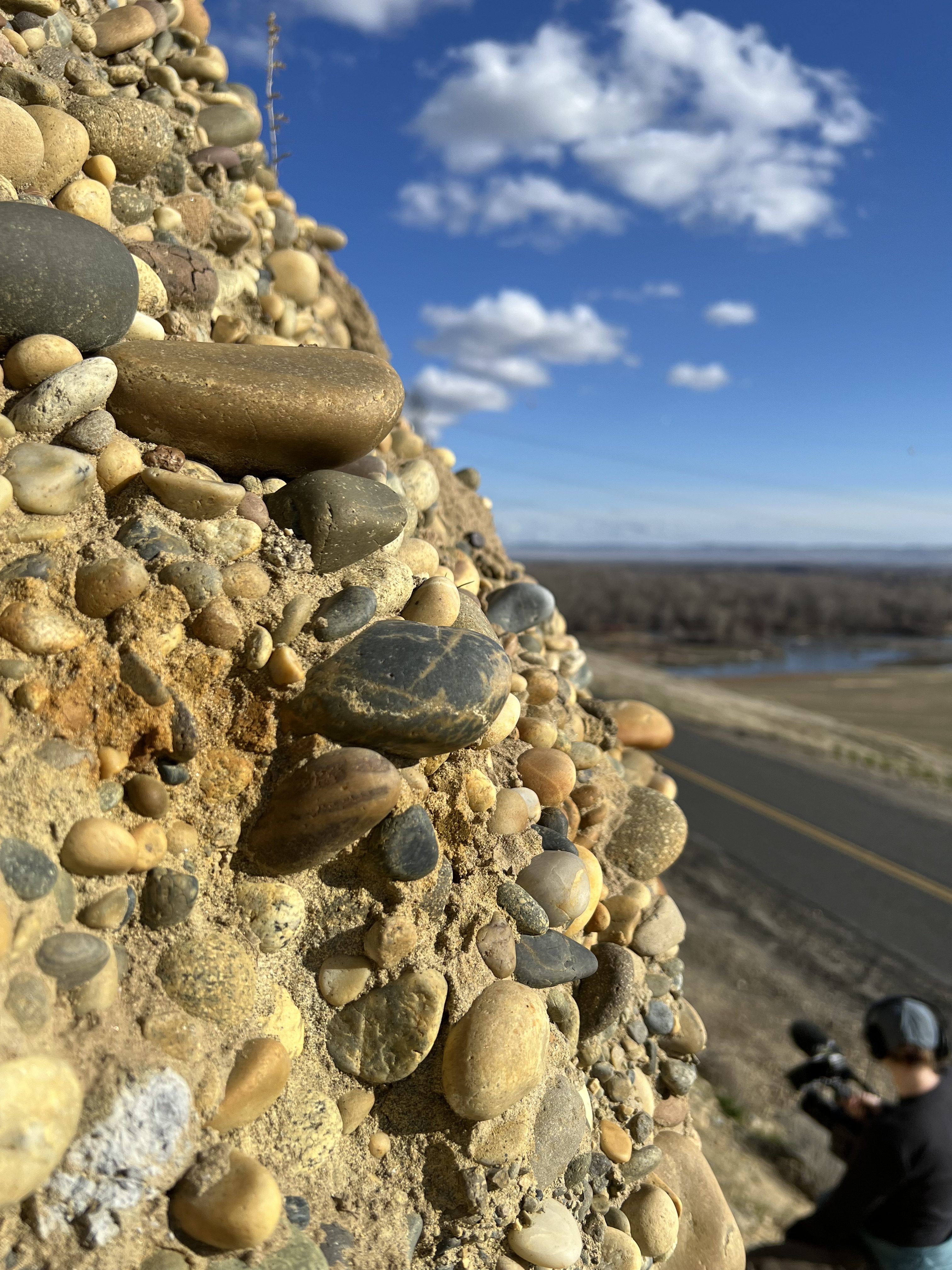
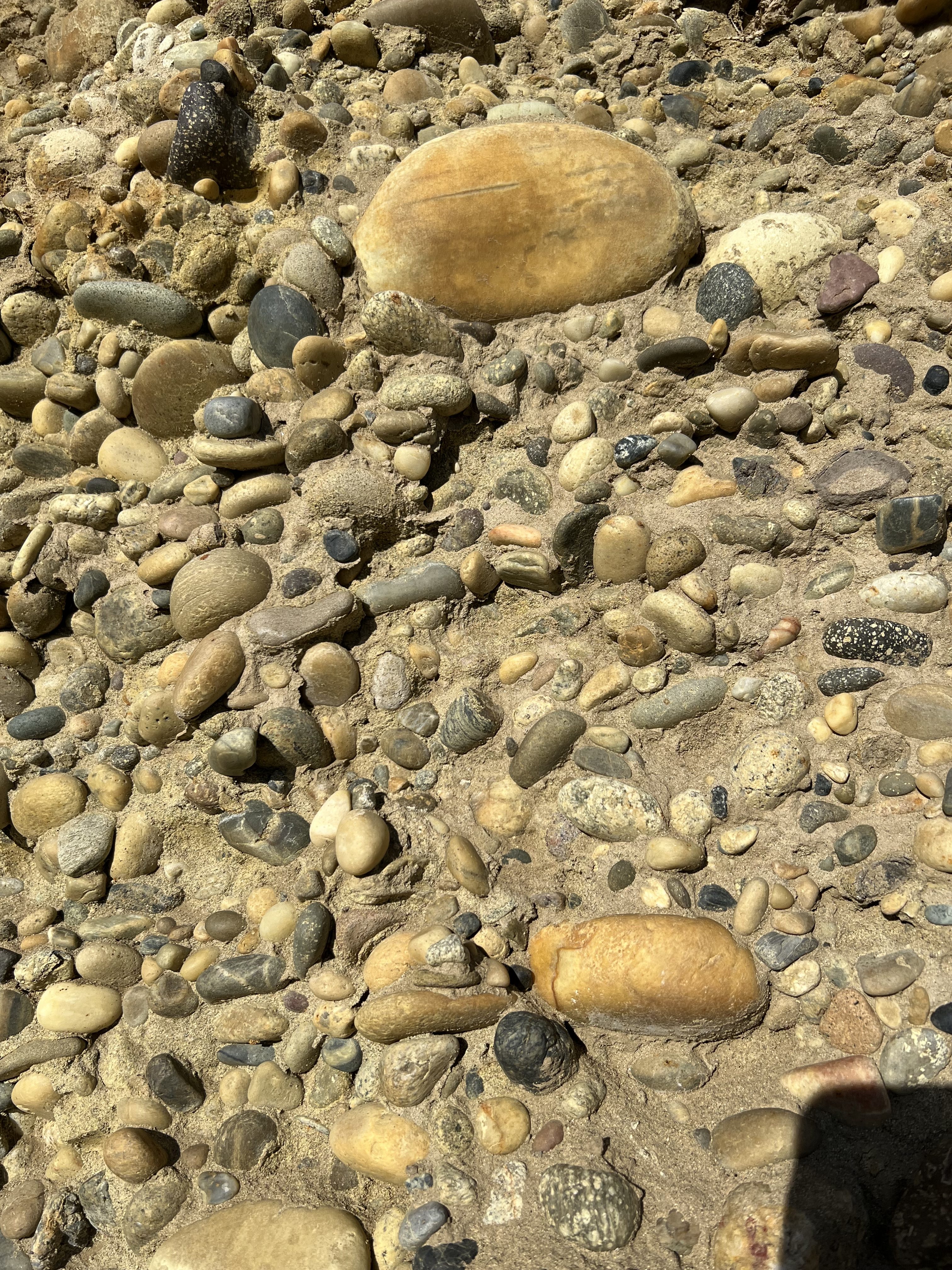
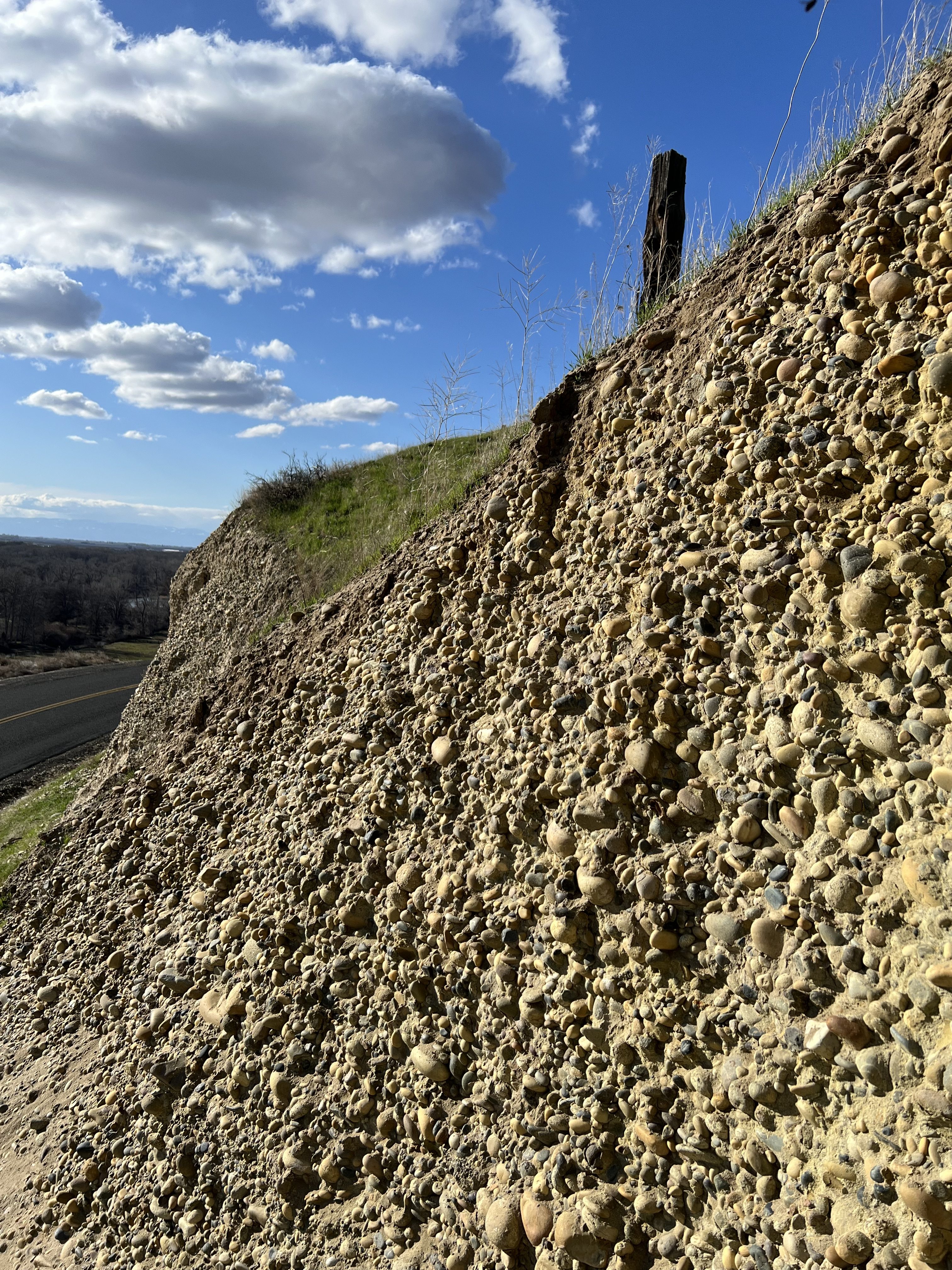
After the interview, Nick showed Seattle Times’ reporters how to “read the rocks” in a roadside cut near Granger, Washington. Ten-million-year-old blond quartzite river cobbles, resembling potatoes, were stacked several stories high, evidence that the powerful, ancient Columbia River once flowed here (it is now some 15 miles away). The cobbles themselves are like a work of art.
Nick Zentner, geology professor at Central Washington University, describes the geology of the Columbia River Basin at a roadside cut near Granger, Washington. Photo by Fiona Martin.Close-up of 10-million-year-old river cobbles transported by the ancient Columbia River. Today, the Columbia River is about 15 miles away from this site. (The Yakima River is visible in the background.) Photo by Fiona Martin.Another close-up of ancient river cobbles embedded in the roadside cut. Photo by Fiona Martin.The river cobbles are stacked 10–20 feet high in some locations. Photo by Fiona Martin.
Once you know what to look for, you can read the history of Washington. I sought to convey this concept through illustrative storytelling. While Nick talked about geology, I was busy sketching, listening, and gathering as many visual notes as I could.
“While field sketching, I observe on a deeper level. I notice more than I would passing by, because I’m forced to capture the basic shapes, proportions, light and shadow. I take notes on colors, textures, proportions, and patterns. I think about how I might build the final layout. Accuracy is less of a concern—field sketching is more about capturing the moment.” —Fiona Martin
In this ink sketch of a roadside cut, Fiona designed and stylized quite a bit—the real scene was incredibly detailed and large. The resulting sketch shows only the most important elements needed to tell the story. Later in her studio, Fiona created a color version that served as the backdrop for several illustrations.
Here’s a peek at some of my original sketches and storyboarding, which helped to organize the scrolling, visual story:
Some ideas didn’t make the cut in peer reviews. I had originally planned to end the scroller with a “toast” to the ice age floods, which brought the fine silty soil that supports 90% of Washington’s wineries. But alcohol can be a sensitive subject, and Seattle Times wanted this presentation to be a resource for teachers and students.
After storyboarding, I created more detailed preliminary sketches, paying attention to proportions and accuracy. The illustration below describes some of the ecological costs of hydropower damming. Walleye (Sander vitreus) are an invasive, predatory fish with an appetite for juvenile salmon, and they love the warm slackwater reservoirs behind the dams. It would have been difficult to photograph a walleye eating salmon, so this was a good opportunity to add an illustration. (Read more about this invasive fish and the efforts of the Nez Perce tribe to save salmon in Chapter 4: Unraveling.)
For the color rendering, I used Procreate on an iPad tablet with an Apple pencil. My digital painting method captures the expressiveness of traditional acrylic or oil painting, while retaining editable layers for production needs. On the iPad, I prefer a screen protector that has a paper texture. Using only a few brushes, I start with midtones first, then add shadows, highlights, and textures. My favorite part of the process is seeing the sketches “come to life.”
Next, I added the illustrations and maps to a scrolling story, “Born of Fire and Ice,” using some custom HTML/CSS/JS. The scrolling story transforms passive reading into an engaging, immersive experience that enhances understanding and information retention.
Finally, I turned the scroller into a print layout, which was published on C1 and C2. The print version recently won First Place Page Design in the Best of the West journalism contest.
“This visual field trip on how to read the landscape of the Columbia River Basin was an effective solution to a design issue of how to illustrate geologic history going back millions of years,” the judge wrote. “It’s a welcoming, engaging, and highly accessible presentation that brings a complex subject vividly to life, making it both readable and memorable.”
Early in the project, I also collaborated with videographer Lauren Frohne to incorporate locator maps in her video, “River rocks without a river”—featuring geology professor and storyteller Nick Zentner. The video has over 9,000 views on YouTube.
A project of this magnitude takes a team, from content experts to copy editors. Special thanks to all the humans who made this possible: