LIFE AFTER THE OSO LANDSLIDE
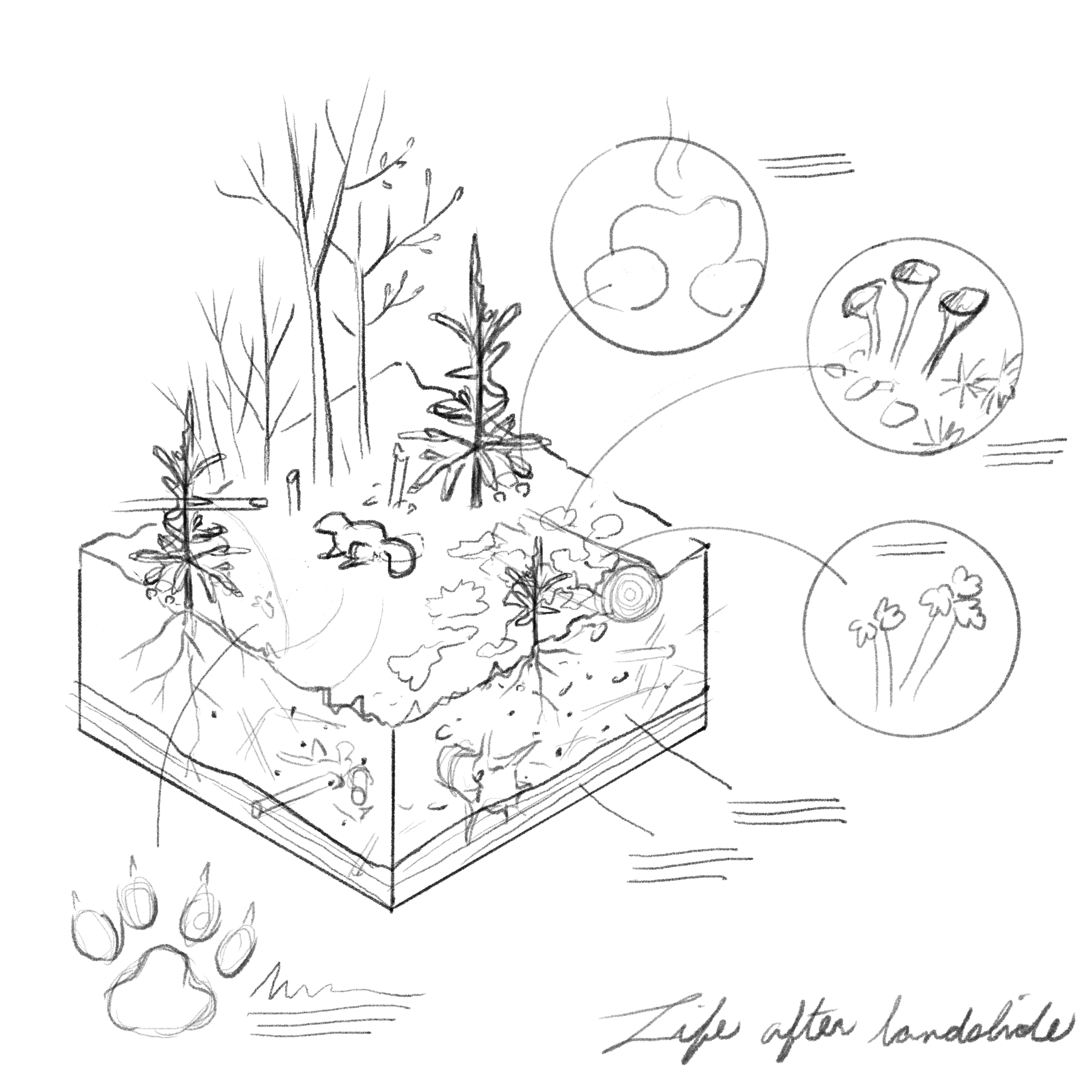
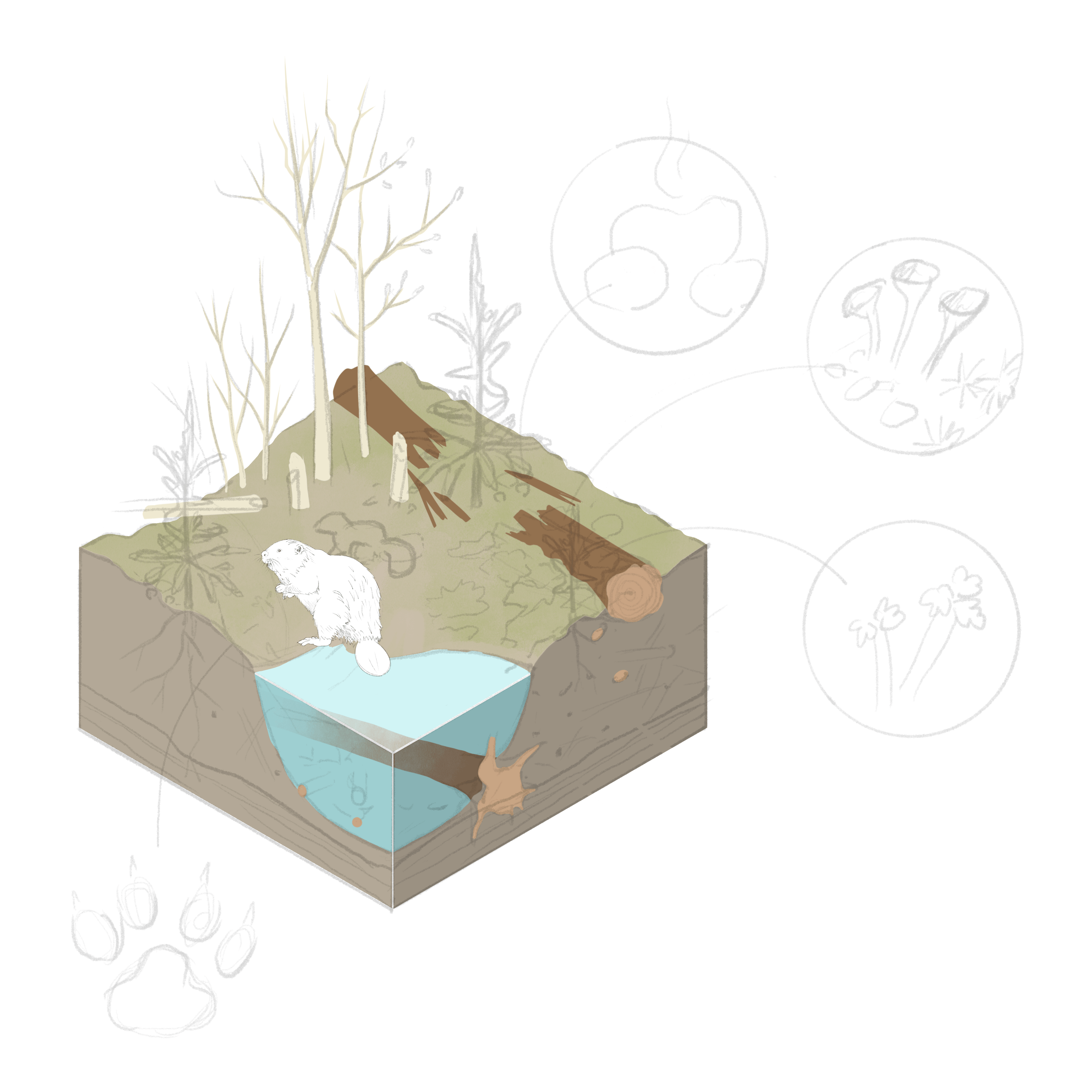
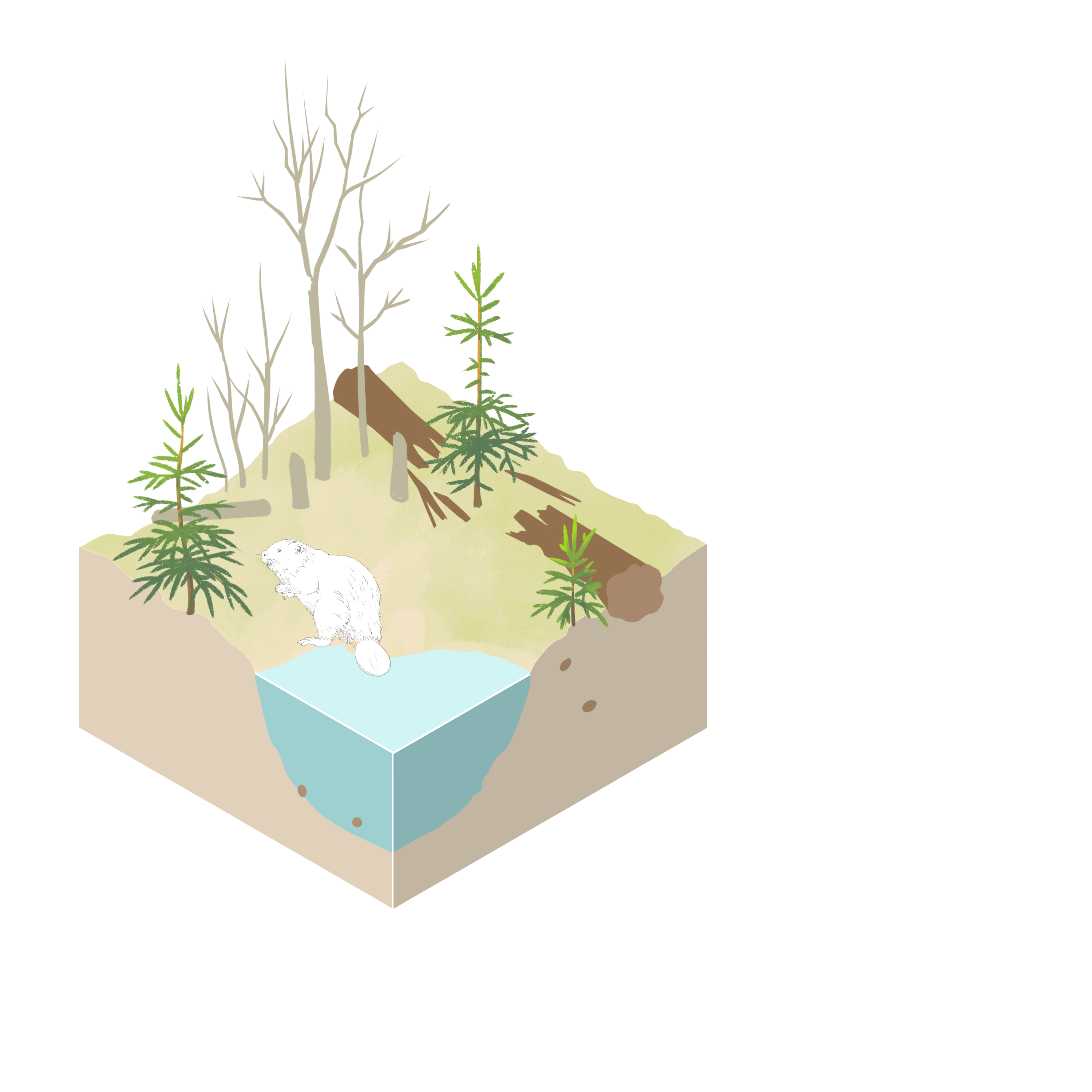
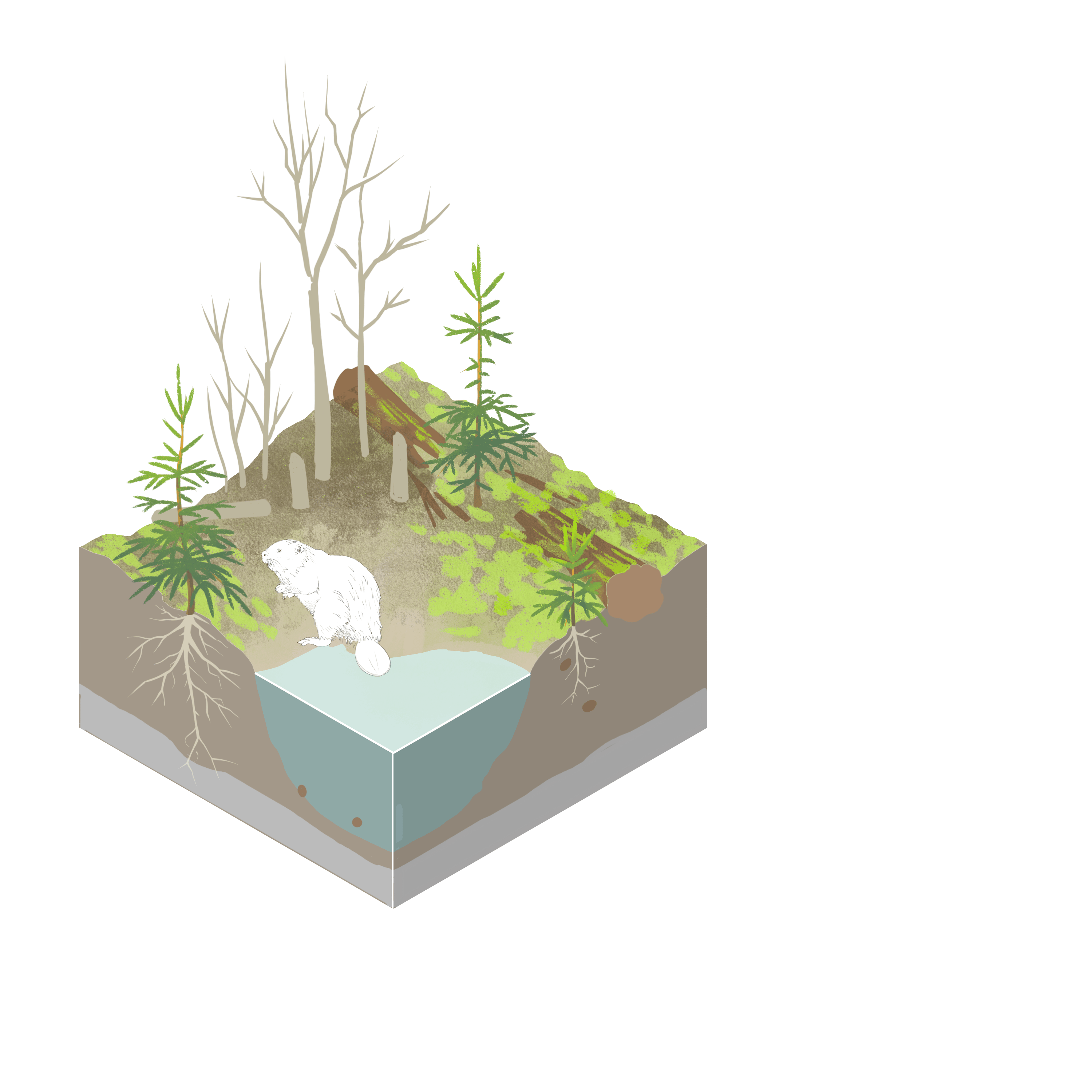
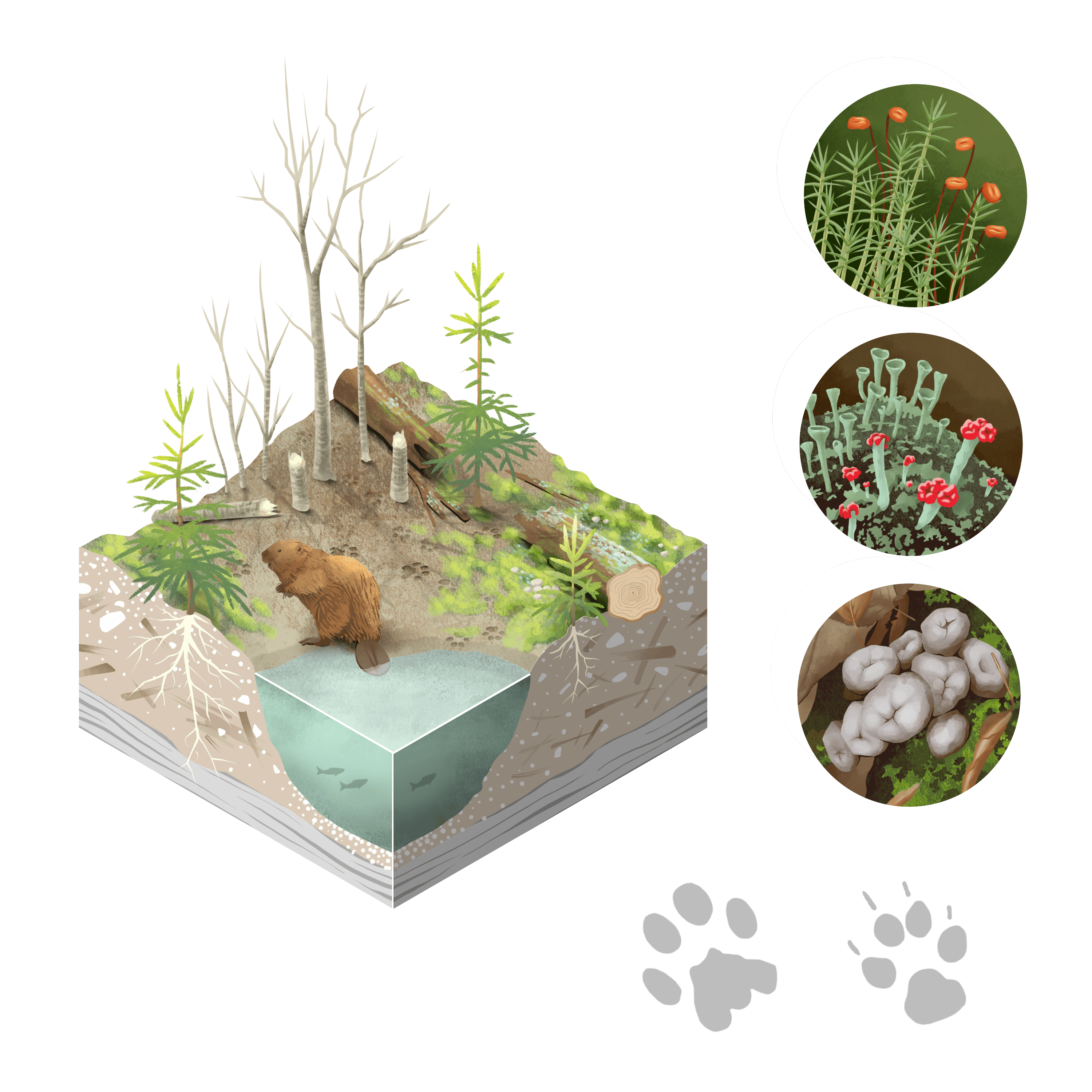
Ten years had passed since the Oso Landslide, and a new forest was emerging. Mosses, lichens and fungi were covering, stabilizing and enriching the sandy hummocks. Young trees were sending their roots deep into the churned layers, further stabilizing the landscape. Beavers were thriving. Elk and deer were eating emerging flowering plants and lichens.
In March 2024, I published an interactive, scrolling graphic in a Seattle Times article written by Lynda Mapes. The illustrations helped to visualize organisms large and small that were integral to the landscape’s recovery. Circular insets draw attention to the living groundcover—known as a cryptobiotic crust—revealing a rich community of species that is often overlooked.
Collaboration was a cornerstone of this project—initial research included fieldwork with environment reporter Lynda Mapes, videographer/photographer Karen Ducey, the Stillaguamish Tribe, UW emeritus professor Thomas Hinckley, and lichenologist Garry Neil.
Explore the print graphic and sketches below.

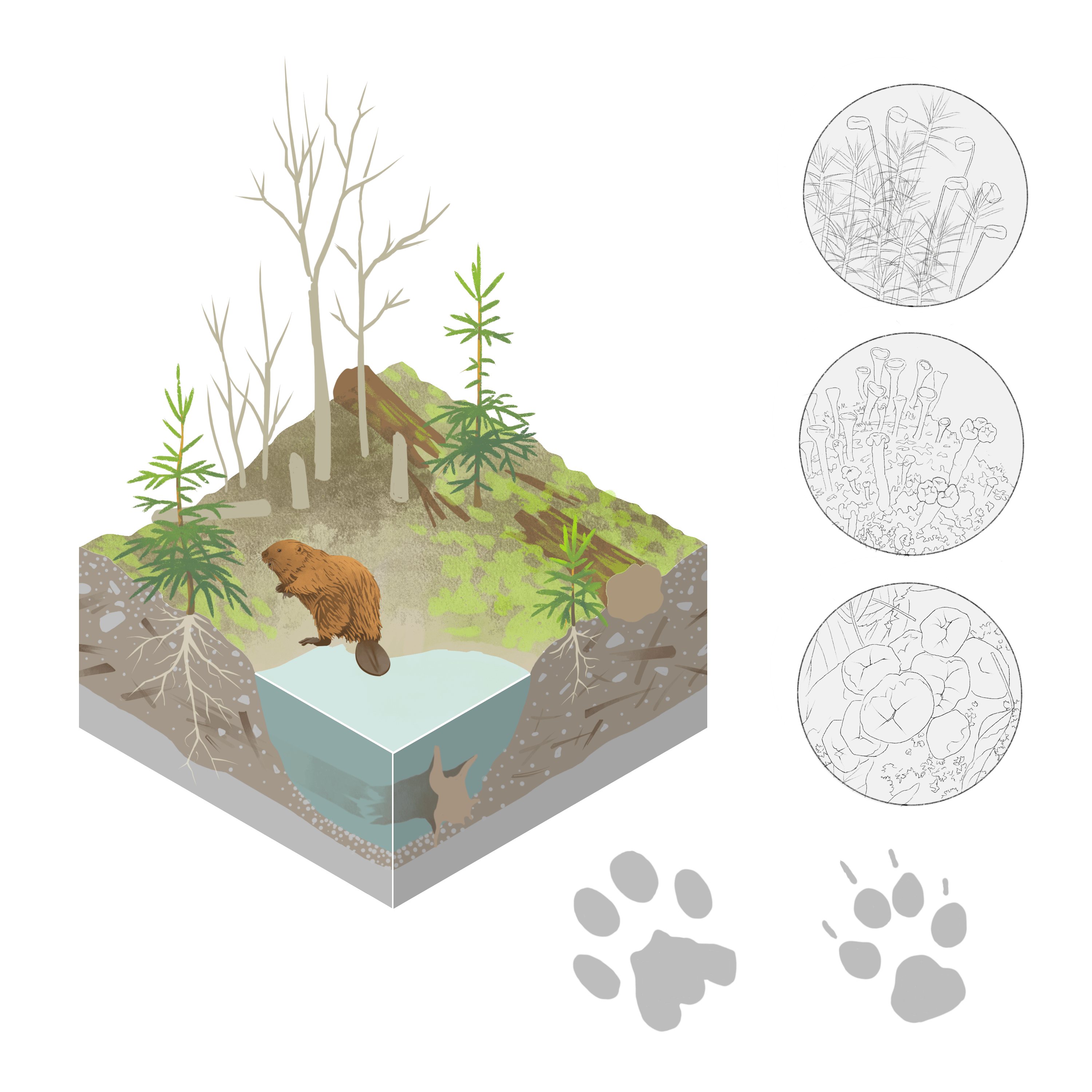
Process
Here’s some of my initial brainstorming and rough drafts.