Skip to Content

FOR WASHINGTON STEELHEAD, FLEXIBILITY IS A SURVIVAL STRATEGY

View the scrolling story published on Sept. 22, 2024, in The Seattle Times.

If freshwater resources are plentiful and stable, Oncorhynchus mykiss can choose to stay in freshwater as fully speckled rainbow trout; if food is scarce, water is too low or temperatures are too warm, the fish can opt to make an ardous journey to the ocean, transforming into their silvery anadromous forms. Unlike salmon, they return to natal streams in two runs—summer and winter—and can spawn more than once in their lifetime. But increasing temperatures, overfishing and numerous man-made obstacles threaten even the most resilient fish.

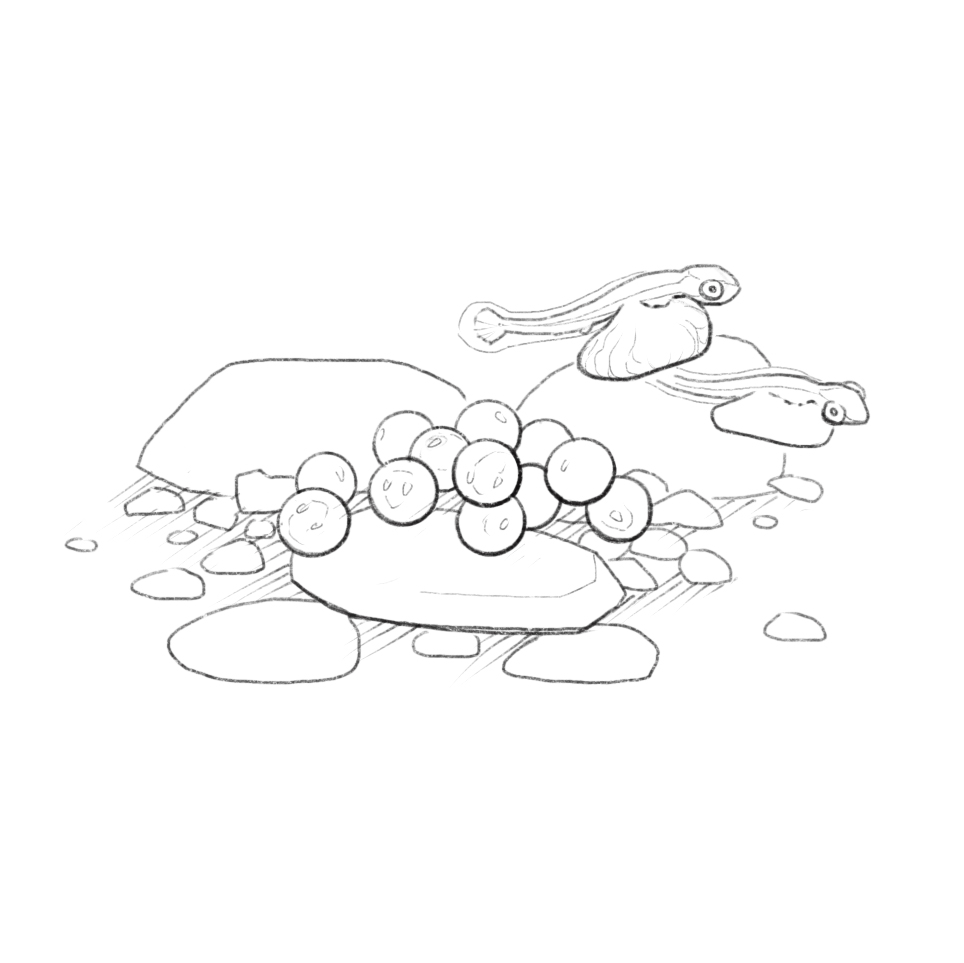
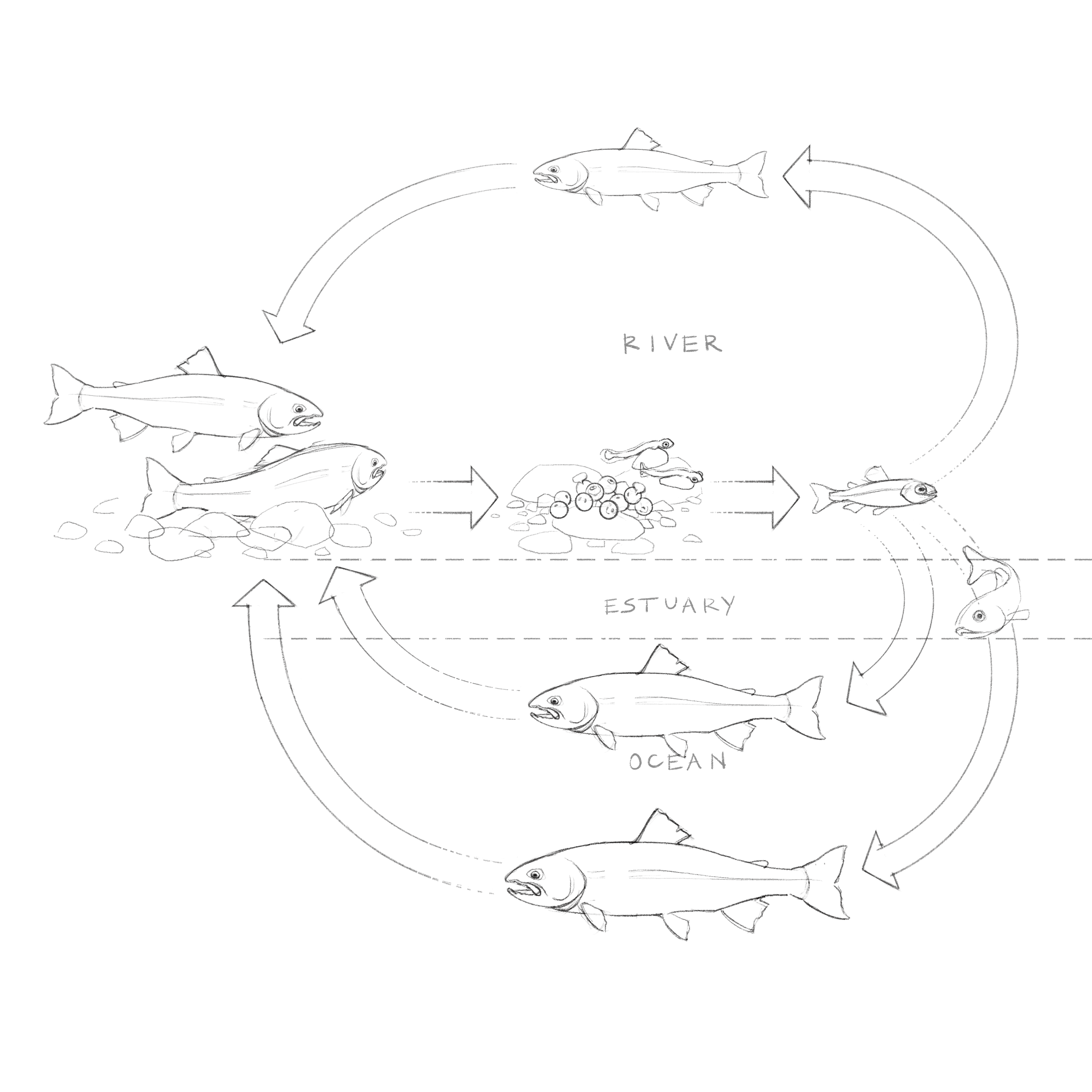
Illustration of the steelhead trout lifecycle, depicting stages from spawning adults to larvae, parr, smolt, summer steelhead, and winter steelhead.

Process

Here’s some of my initial brainstorming and sketches. Steelhead/rainbow trout have a very unique life cycle which seemed to fit better in a figure eight rather than a circle or oval. I placed a question mark where the fish makes a decision, and its path diverges between freshwater and the ocean.

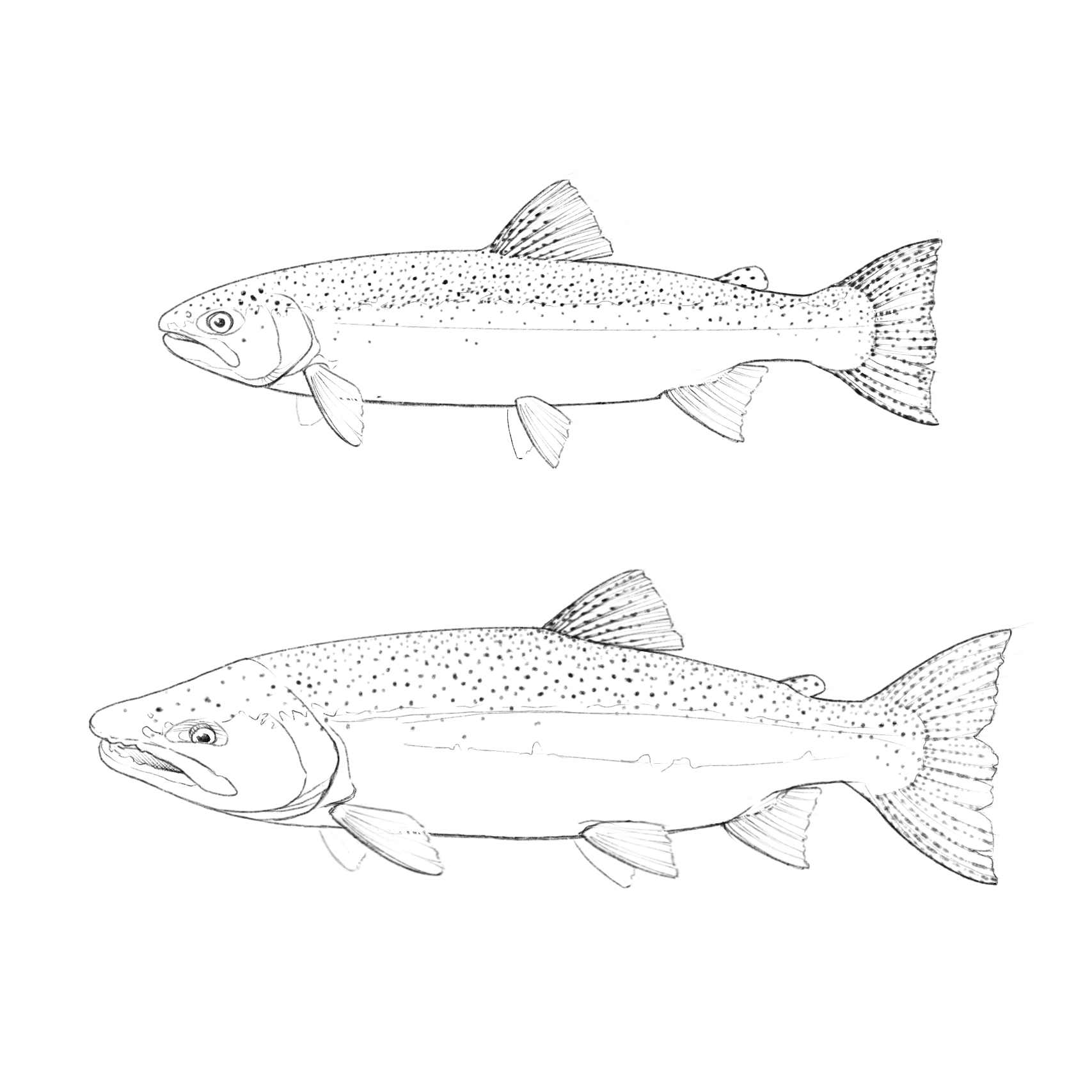
I ran the draft sketches by a steelhead expert, John McMillan (a.k.a. @rainforeststeel), to make sure my anatomy and coloring was correct—especially between summer and winter steelhead. I rendered the final art digitally in Procreate, in the style of ink and watercolor. Labels were added in Adobe Illustrator.

Featured

FUSION ENERGY
Helion's fusion might power Microsoft data centers
FUSION ENERGY
HOW FORESTS CAPTURE CARBON
Illustration: Trees absorb carbon dioxide from the air and turn it into sugars, using the food to grow. This process, called photosynthesis, allows plants to make their own food, storing the carbon in their tissues as they grow roots, branches and leaves. In this way, forests help fight climate change by absorbing and storing carbon pollution that is heating the planet. Big trees store the most carbon because of their mass, and long-lived species such as Douglas fir and red cedar can lock carbon away for centuries. Trees absorb carbon dioxide gas through openings in leaves or needles called stomata. Chloroplasts within leaves and needles use the energy of the sun to split water molecules drawn up through tree roots into hydrogen and oxygen, released through their stomata. Trees and other green plants create the air we breathe, and shelter and nourish life as we know it.
HOW FORESTS CAPTURE CARBON
PINK SALMON BOOM
PINK SALMON BOOM
ICE ARRESTS BY SEATTLE FIELD OFFICE
Multi-chart graphic showing that several northwest counties and municipalities saw a sharp increase in ICE arrests following the start of President Trump's second term, including King, Clark, Whatcom, and Yakima Counties in Washington; Multnomah, Marion, and Washington Counties in Oregon, and Anchorage municipality.
ICE ARRESTS BY SEATTLE FIELD OFFICE