
NOAA CLIMATE PROGRAM OFFICE 2024–2028 STRATEGIC PLAN
The NOAA Climate Program Office, known as CPO, aims to advance climate research, make the science accessible and transparent, strengthen partnerships across government and private sectors, and support diversity, equity, and inclusion in the workplace. I designed and illustrated this solutions-oriented report over a period of approximately 9 months. ✍️ Writing and fact-checking by some of NOAA’s top scientists. 💻 Editing and oversight by CPO communications team.
Explore the PDF here or download a copy:
On July 24, 2025, the current administration redirected CPO’s Climate.gov homepage to an NOAA page with Trump’s “gold standard” executive order. Many CPO personnel were terminated and others felt pressured to take early retirement. Many contracts and grants were canceled, impacting their ability to produce and publish analyses of weather impacts and adaptation strategies.
I have since shared this report widely with my colleagues and on LinkedIn.
Sept. 2025 update: CPO’s communication team is restoring their original content and publishing new climate updates at Climate.us.
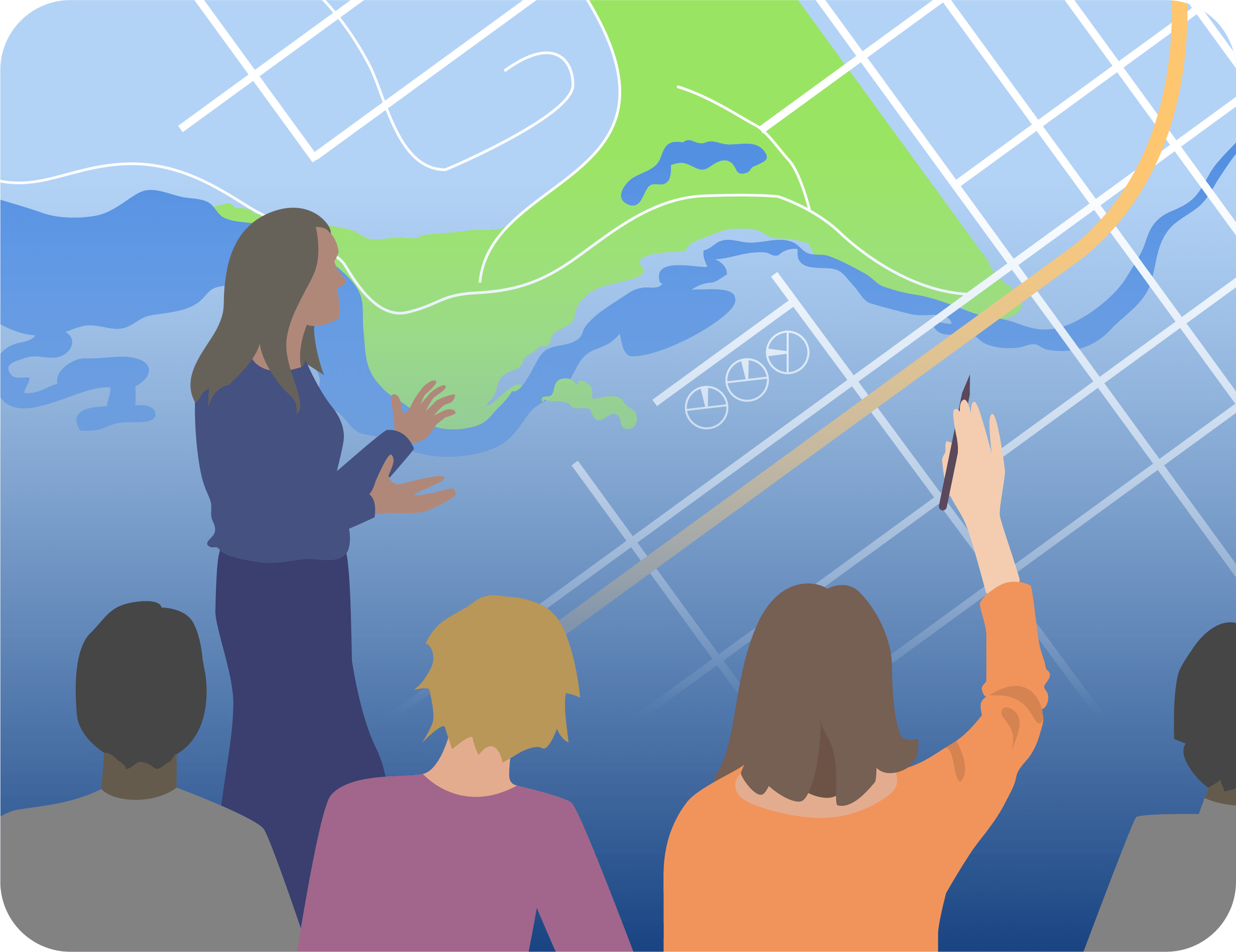
Here’s a closer look at some of the illustrations included in the report.










Background
This project was commissioned by NOAA’s Climate Program Office (CPO), where I was a civilian contractor from 2014–2024—starting first with the Climate.gov News & Features team and then producing annual and regional multipage reports with CPO’s communications division and the National Integrated Drought Information System (Drought.gov).
I built the vector illustrations in Adobe Illustrator and I designed the 28-page report in Adobe InDesign, with 508-compliant for accessibility. It was published online on Climate.gov as a downloadable PDF and also distributed in print.
The illustrations are intended to highlight solutions and adaptations to climate change. In coordination with the CPO team, I was careful to represent a range of climate personnel with different identities, backgrounds, and areas of expertise. I represent communities across the U.S., from rural to urban. I highlight climate research in the air, land and sea; in biology, chemistry, and physics labs; and with robotics/ROVs.
Here’s some of the draft sketches:


When designing a multipage publication, I like to start with a style guide and color palette.

The report design, illustrations, and content went through several rounds of revisions with CPO staff and scientists. Here, you can compare two covers—an early draft versus the final version.


