
HOW BIRD FLU CAN SPREAD
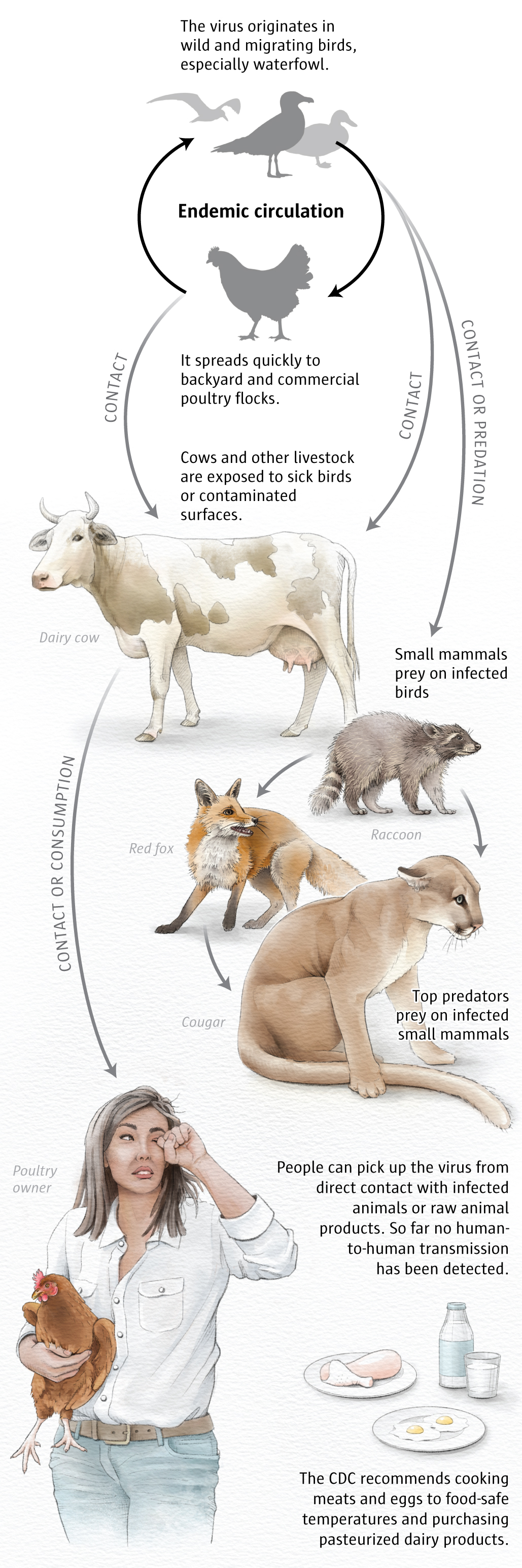
In March 2025, I collaborated with reporter Elise Takahama on a Seattle Times visual explainer about how the H5N1 virus—a highly pathogenic form of bird flu—can spread from wildlife to livestock and humans. I developed the visual approach and co-wrote the story with Elise, drawing on research into H5N1 transmission and its effects on wildlife.
For the lead infographic, I used Procreate to create illustrations with the look of traditional pencil and watercolor while keeping the artwork fully editable in layers. I then brought the illustrations into Adobe Illustrator to add bird silhouettes, arrows and labels, referencing images of infected cougars provided by Panthera.
The graphic explains several pathways for H5N1 transmission—including direct contact with infected animals, contaminated surfaces and airborne particles—making complex epidemiology easier to understand at a glance.
I also designed interactive maps and a chart to help readers understand human and animal case data for a related story.
View the graphics here or read the full story in The Seattle Times.
Inspiration for future work
As part of the concept-development process, I sketched several additional graphics that ultimately weren’t published. These included ideas for a cutaway of the H5N1 virus itself, inspired by the now-familiar “spiky blob” visual language used to explain SARS-CoV-2 during the COVID-19 pandemic. I’d still like to develop that concept into a finished illustration.


